
Last updated October 15, 2026
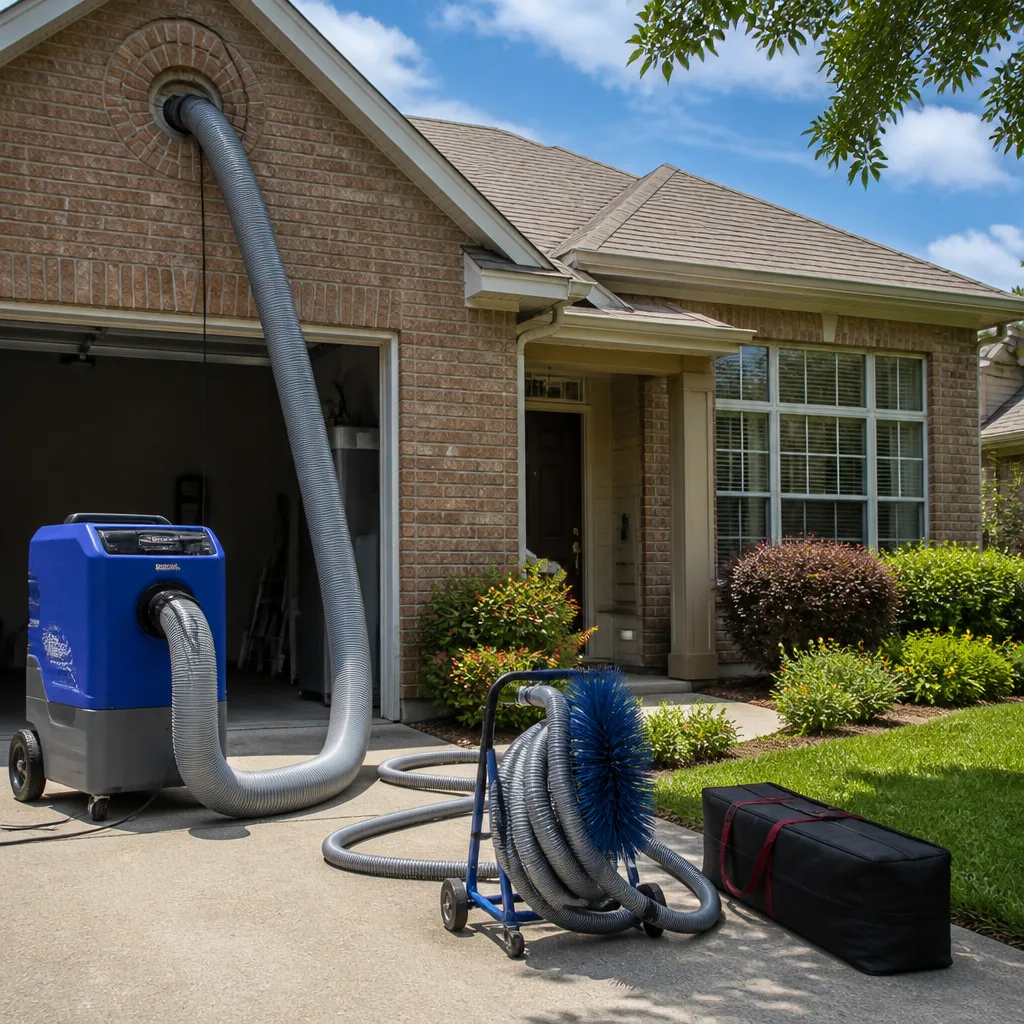 Whole-home duct cleaning
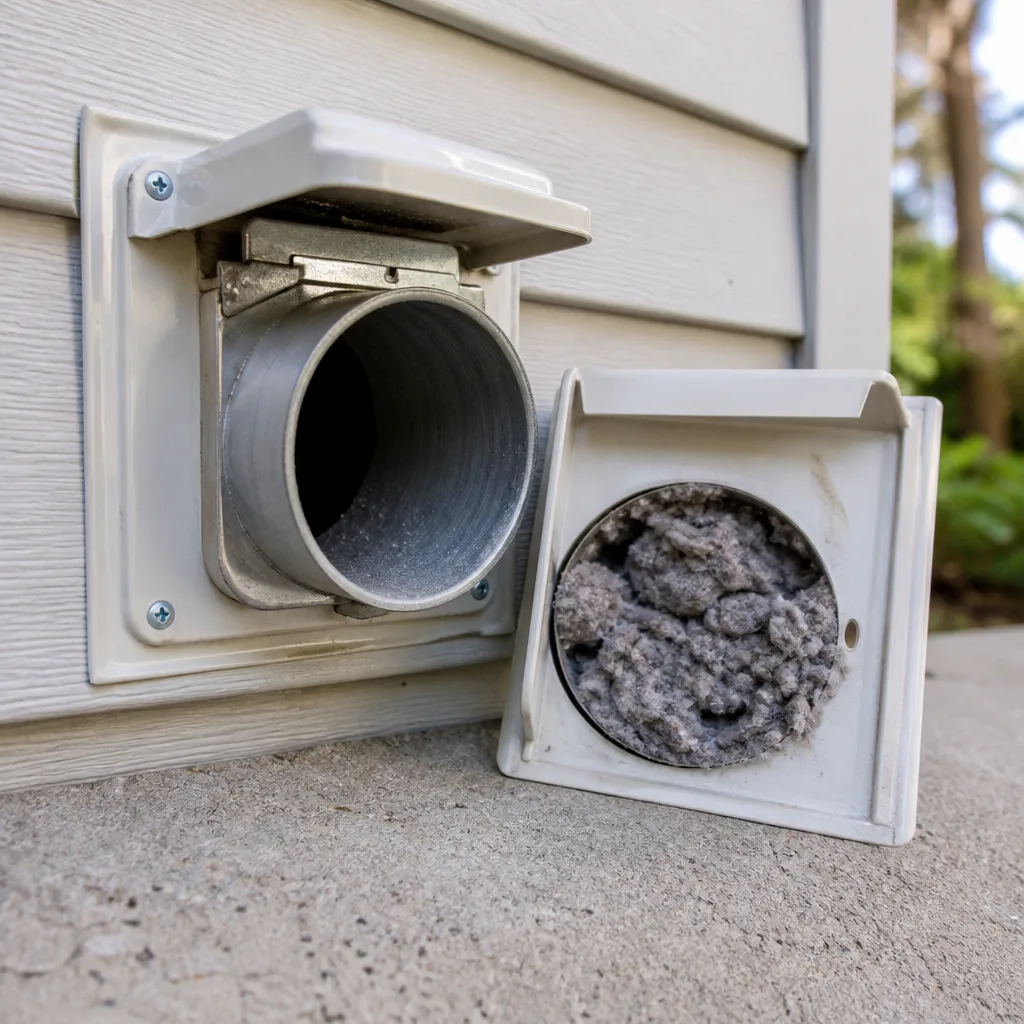 Dryer vent cleaning
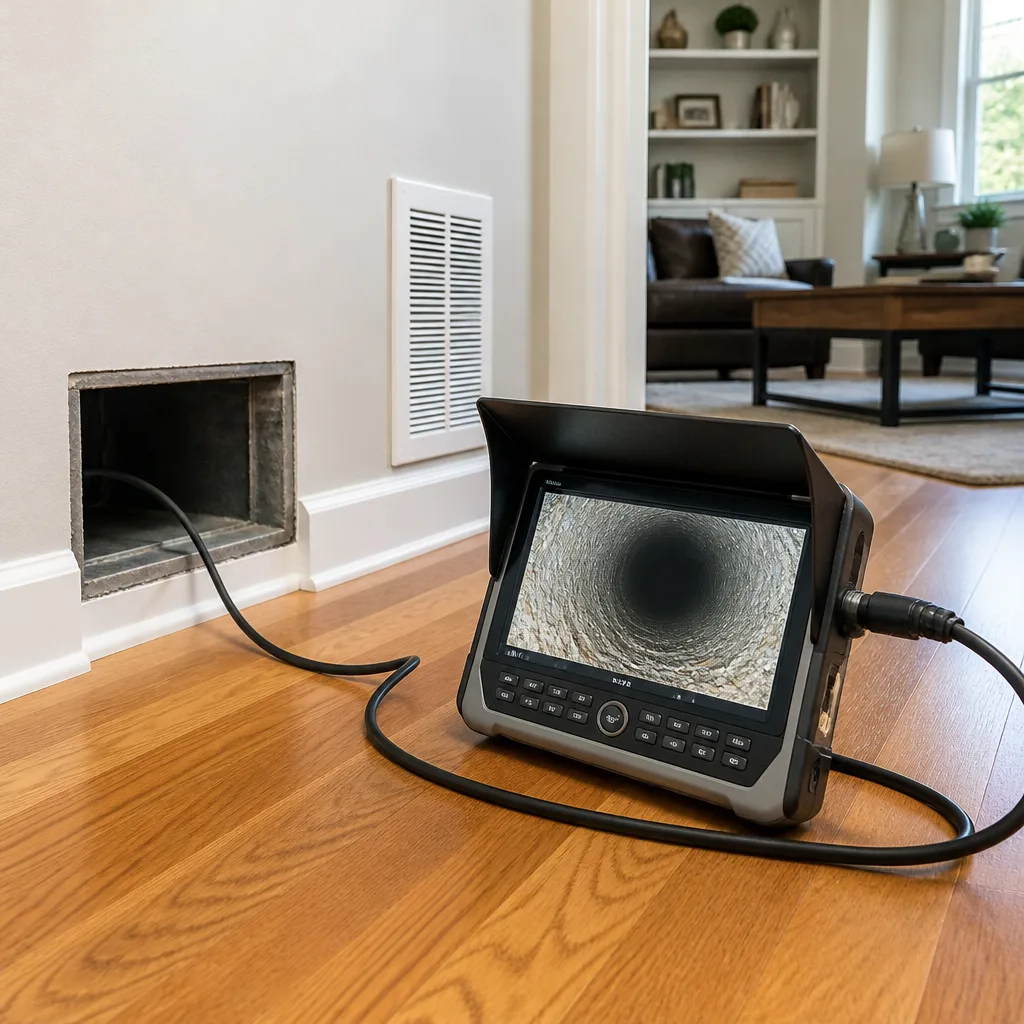 Camera inspection
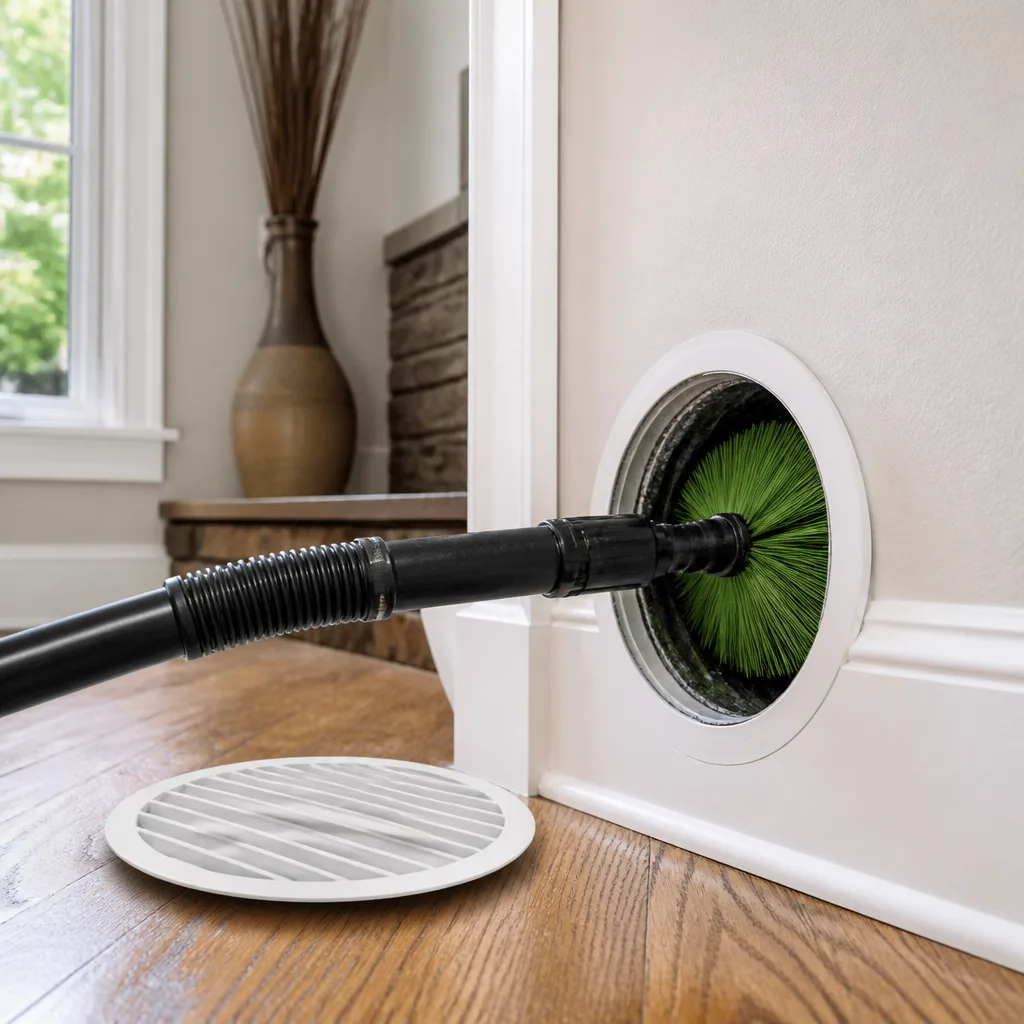 Sanitizing & deodorizing
Whole-system duct and dryer vent check with before-and-after photos - you see exactly what came out of your vents
That "$99 whole-house special" is a bait ad - the real number appears once they are in your hallway, or the "clean" is a shop-vac at the register. We photograph the inside of your ducts before and after instead.
Air Duct Cleaning Permits, Codes & Inspections in FL: What You Need to Know
Here’s a counterintuitive fact for homeowners in Tampa: the single strongest predictor of whether your air duct cleaning job spirals into an unpermitted mess isn’t the age of your home or the condition of your ducts. It’s whether the company you hire quietly blurs the line between cleaning and mechanical modification. Florida Statute 489 draws a hard line between the two, and that line determines whether a permit is required, whether a licensed contractor must be on site, and whether the work you paid for will pass scrutiny when you eventually sell the house. Most routine our Air Duct Cleaning services fall cleanly on the no-permit side. The problems start when a technician decides a duct needs “just a small patch” or “a quick seal” without telling you that phrase puts the job on the other side of the statute.
Styles & brands we work with
Quick Answer
For the vast majority of air duct cleaning jobs in Florida, no permit is required because cleaning is classified as maintenance, not construction, as explained in The Complete Guide to Air Duct Cleaning in Tampa. The exemption disappears the moment any duct is modified, replaced, or sealed with a coating, at which point the work falls under licensed mechanical contracting and may require a permit pulled with your county (Hillsborough County in the Tampa area). The simple test: if the job touches or changes the ductwork itself rather than cleaning what’s already there, you need to ask the company whether they hold a mechanical contractor license and whether a permit is required for the scope.
Table of Contents
- Florida Law: Where Cleaning Ends and Mechanical Work Begins
- License vs. Permit: Two Different Requirements in Florida
- How Hillsborough County Handles Duct Modification Permits
- Duct Sealing and Coating: When a “Cleaning Add-On” Requires a Contractor
- How to Request Final Inspection Records and Why They Matter at Resale
- The Paper Trail Every Homeowner Should Keep
- What Tampa’s Climate Means for Your Ducts (and Your Permit Questions)
- Common Mistakes to Avoid
- When to Call a Professional
- Frequently Asked Questions
- The Bottom Line
Florida Law: Where Cleaning Ends and Mechanical Work Begins
Florida Statute 489.105 defines mechanical contracting as including the installation, maintenance, repair, or alteration of air conditioning and ventilation systems, including ductwork. The word “maintenance” in that definition causes a lot of confusion, because cleaning could arguably be called maintenance. But the Florida Department of Business and Professional Regulation (DBPR) and the building code officials we work with in Hillsborough County interpret maintenance cleaning as distinct from repair or alteration. Cleaning removes accumulated debris from the interior surface of existing ducts. Repair or alteration changes the ducts themselves: cutting a section, replacing flex duct, adding a return, installing a new supply run, or applying a sealant that bonds to the duct material.
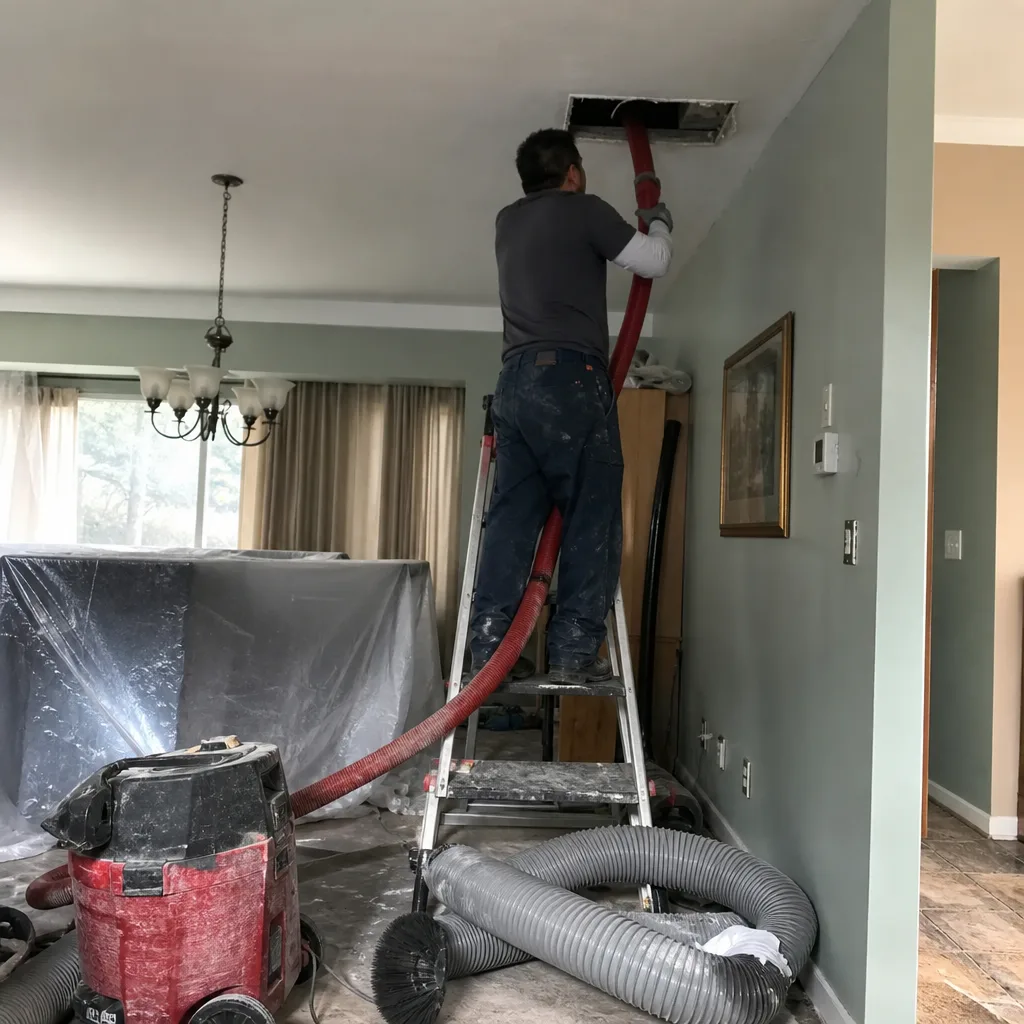
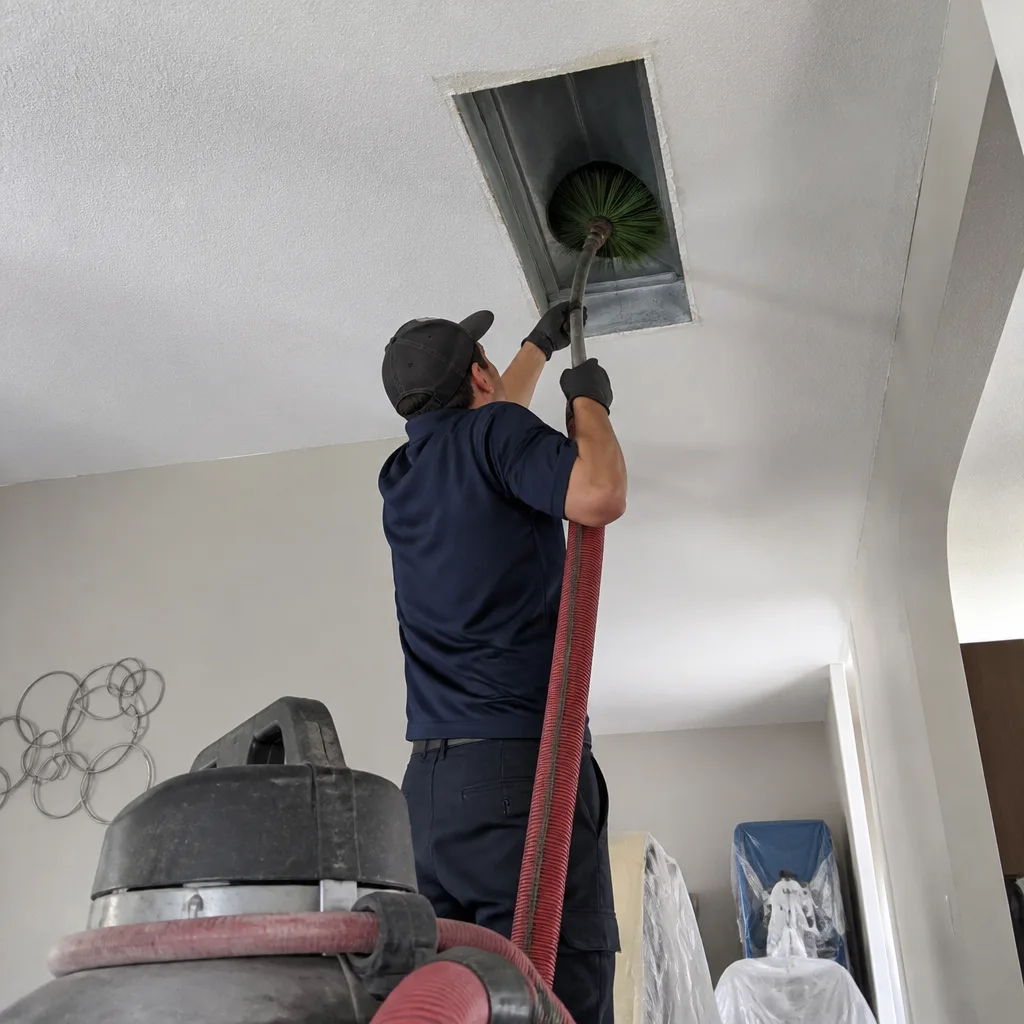
Here’s the practical distinction. If a technician in South Tampa hooks up a Rotobrush or Nikro agitation system to your existing ducts and removes dust, pet hair, and debris, that’s cleaning. No permit, no mechanical contractor license required for the cleaning itself. But if that same technician says, “this flex duct in your attic is torn, I can patch that for you,” the job has now crossed into mechanical repair. In Florida, that repair legally requires a licensed mechanical contractor, and if the repair exceeds the threshold your county sets as “minor repair,” it requires a permit. Many homeowners don’t realize the person who cleaned their ducts may not be licensed to repair them, and the two services often get bundled in a single invoice without the distinction ever being explained.
What we tell families in Tampa is simple: ask the technician to write down exactly what they plan to do before they start. If the written scope says “clean supply ducts and return plenum,” you’re on the cleaning side. If it says “replace flex run,” “seal joints,” or “install access panel,” you’re on the mechanical side, and you should ask to see a mechanical contractor license number. That two-minute check keeps you out of the gray zone.
License vs. Permit: Two Different Requirements in Florida
Homeowners often use “license” and “permit” interchangeably, but in Florida they are entirely separate obligations, and understanding the difference is the single most useful thing you can do before hiring any duct company in Tampa.
A license is what the person holds. A permit is what the jurisdiction issues for a specific job. A licensed mechanical contractor in Florida has passed state exams, carries insurance, and is registered with the DBPR. A permit is a document pulled with the local building department (Hillsborough County for Tampa residents) that authorizes specific work at a specific address and triggers an inspection afterward.
For routine air duct cleaning, neither applies: the cleaning technician needs no mechanical license, and the job needs no permit. For duct modification, both generally apply: the person doing the work must hold a mechanical contractor license, and the job itself must be permitted if it exceeds the minor repair threshold. In Hillsborough County, that threshold is defined in the local amendments to the Florida Building Code. Replacing a small section of flex duct under a certain length may qualify as a minor repair that doesn’t need a permit, but any new duct run, new return, or alteration to the system layout requires a permit almost without exception.
Here’s a simple decision tree we walk families through when they ask about their Tampa home:
- Is the scope limited to cleaning existing ducts? No license or permit needed.
- Does the scope include repairing or replacing any duct material? The person doing that work must be a licensed mechanical contractor.
- Does the repair involve new duct runs, new returns, or changes to system layout? A permit is required, pulled with Hillsborough County or whichever jurisdiction covers the property.
- Does the company resist showing a license number or explaining the permit path? Stop and get a second opinion before any work starts.
The state’s licensing database is public. You can verify any contractor license number through the DBPR website in about ninety seconds. That’s the fastest way to know whether the person standing in your hallway can legally do the modification work they just proposed.
How Hillsborough County Handles Duct Modification Permits
When duct work in your Tampa home does cross into permit territory, the process in Hillsborough County follows a specific path. If you’ve never pulled a mechanical permit before, here’s what actually happens.
A licensed mechanical contractor files the permit application with the Hillsborough County Development Services Department. The application includes a scope of work describing exactly which ducts are being replaced, added, or modified, along with supporting documents showing the work complies with the Florida Building Code and the Florida Mechanical Code. The county reviews the application, issues the permit, and then the contractor performs the work. After completion, the contractor calls for an inspection. A county inspector visits the property, checks the work against the permitted scope and code requirements, and either passes it or issues a correction notice. If it passes, the permit is closed, and the final inspection is recorded in the county’s permit records.
That final inspection record is the most undervalued document in a Tampa home’s paper trail. When you sell the house, a buyer’s home inspector or the buyer’s lender may ask whether any mechanical work was performed and whether it was permitted and closed. Unpermitted duct modification that surfaces at resale becomes a negotiation point: you either pay to have it permitted retroactively (which often costs more than the original permit would have) or you discount the sale price. In some cases, homeowners have had to have unpermitted work removed and redone because the county wouldn’t sign off on work it never inspected.
If you’re buying a home in neighborhoods like Westchase or New Tampa and the seller mentions “all new duct work” from five years ago, ask for the permit number. If they can’t produce one, ask your real estate agent to pull the county permit record. Those records are public, and they’ll show whether a mechanical permit was ever pulled for that address, whether it was finaled, and what scope was approved. The same caution applies in reverse: if you’re getting duct work done now, keep the permit number in a file, because it saves you money and stress at resale.
Duct Sealing and Coating: When a “Cleaning Add-On” Requires a Contractor
This section covers the single most common way Tampa homeowners get pulled into unpermitted territory without realizing it: duct sealing or encapsulation sold as an add-on during a cleaning visit.
Duct sealing generally means applying a sealant product to the interior surfaces of the duct system, or mechanically sealing joints and seams from the outside. Interior sealant application uses equipment similar to what you’d see in a duct cleaning job: a sprayer or fogger that distributes the product through the ductwork. That visual similarity is exactly why homeowners don’t question it. The company says “we’re going to clean your ducts and then seal them so dust doesn’t come back,” and the homeowner hears one job. But under Florida Statute 489, applying a sealant coating to a ventilation system is mechanical work. It alters the ducts. It’s not maintenance.
What that means in practice: the person applying the sealant must be a licensed mechanical contractor. If the technician who just finished cleaning your ducts isn’t licensed, they cannot legally apply a sealant coating, regardless of what equipment they brought or what brand name is on the product. We’ve worked alongside licensed mechanical contractors in the Tampa area on jobs where this distinction came up, and the homeowners were consistently surprised that the cleaning company’s quote for “sealing” wasn’t the same as a licensed contractor’s scope of work. Ask the company to show you their mechanical contractor license before you agree to any sealing or encapsulation service. If they tell you “you don’t need a license for this in Florida,” thank them for their time and end the conversation.
Encapsulation is a related term that sometimes means cleaning the interior and then applying a coating that seals down any remaining dust, fiberglass, or debris. In commercial settings it may be performed under industrial hygiene standards. In a residential Tampa home, if the encapsulation involves an applied coating, it’s mechanical work under the same statute. The cleaner path for most families is a thorough air duct cleaning in Tampa that physically removes the debris rather than painting over it. That’s the recommendation we make most often: remove the material, don’t seal it in.
How to Request Final Inspection Records and Why They Matter at Resale
If any duct work in your Tampa home was permitted, you already paid for an inspection. Getting a copy of the record is free or low-cost, and it’s one of the fastest ways to protect your resale value.
In Hillsborough County, permit records are maintained by the county’s building department and are available through the county’s online permit search tool or by an in-person records request. To pull a record, you’ll need the property address, and in some cases the permit number or a range of dates. If you don’t have the permit number, search by address and look for any mechanical permits issued over the time period in question. What you’re looking for is a permit status of “finaled” or “closed,” which means the work passed inspection and the permit was formally completed. A permit that’s still open years after the work was done can also create issues, because it means the jurisdiction never received a final inspection request.
Here’s the scenario we hear most often from families selling homes in Brandon, Carrollwood, and Seminole Heights: the previous owner had ducts replaced a decade ago, the current owner doesn’t know whether permits were pulled, and the buyer’s inspector flags the duct work during the inspection period. If the permit record shows the work was permitted and finaled, the issue disappears from the negotiation. If no record exists, the seller either negotiates a credit or, worse, scales back the sale to avoid the problem.
The takeaway: keep the permit number in your home file next to your roof warranty and appliance manuals. The document costs you nothing to retain and can save you a five-figure negotiation at sale. It’s the cheapest insurance in the entire home maintenance paper trail.
The Paper Trail Every Homeowner Should Keep
Whether your duct job is a simple cleaning or a permitted modification, the documents you keep are the difference between a smooth transaction and a dispute. We’ve seen homeowners in Tampa try to reconstruct a duct job from memory three years after the fact, and it never works. Here’s what to keep.
- The written scope of work. Before any work starts, get a written description of exactly what will be done. For cleaning, it should say “clean supply ducts, return plenum, and register boots” or similar specific language. For modification, it should name the duct runs being replaced or added. Vague scopes like “duct service” are the leading warning sign of a company that doesn’t want you to know what it’s doing.
- Before-and-after photos. A reputable company will take photos inside your ducts before and after the work, showing the actual condition. Keep those photos. They’re proof the work happened, proof of the starting condition, and documentation you can show a buyer’s inspector years later. For dryer vent cleaning in Tampa and duct cleaning alike, those photos are the easiest way to prove the job wasn’t theater.
- The technician’s name and license number, if applicable. If the job involved any modification, the technician should be a licensed mechanical contractor, and their license number goes in your file. If the job was cleaning only, the name of the technician and the company still belongs in the file, even though no mechanical license is required for cleaning.
- The permit number, if applicable. For any permitted duct work, write down the permit number the day it’s issued. You’ll need it to pull the final inspection record, and you’ll want it at resale.
- The invoice, itemized. A good invoice lists what was done, how long it took, what equipment was used, and what it cost. It should not say “duct service – $X” and nothing else.
That five-item paper trail takes less than a kitchen drawer of space, and it converts a verbal claim into a documented record. If a company won’t provide any one of those items before or during the job, that’s useful information about how they’d handle a complaint after the job.
What Tampa’s Climate Means for Your Ducts (and Your Permit Questions)
Tampa’s heat and humidity shape your duct system more than any other local factor, and understanding that helps explain why some Florida homes need more than cleaning. The average Tampa home runs its air conditioner somewhere between eight and ten months a year. That means the ducts in your attic are in sustained contact with hot, humid outside air for most of the year, and the temperature differential between the cooled air inside the ducts and the attic air outside them creates condensation on the exterior duct surfaces. Over time, that condensation accelerates material degradation, particularly in flex duct, which makes up the majority of duct runs in Tampa homes built since the 1980s.
What that means practically is that Tampa homeowners see more duct deterioration than homeowners in drier climates. Flex duct outer liners degrade, joints loosen, and in some cases the inner liner separates from the insulation. From there, you have two paths. You have Tampa duct cleaning that removes the debris and dust that’s accumulated inside the system, which is maintenance and requires no permit. Or you have replacement of the deteriorated duct sections, which is mechanical work and requires a licensed contractor, and possibly a permit depending on the scope. The climate didn’t create the permit distinction; the statute did. But the climate is why the distinction comes up so often in Tampa specifically. The environmental conditions here simply generate more instances where a homeowner has to decide between a cleaning job and a repair job.
We also see a lot of homes in flood-prone sections of South Tampa and near the bay where elevated indoor humidity makes interior duct surfaces a more welcoming environment for biological growth. That’s a maintenance issue, addressable with proper cleaning and source control, not a reason to jump into sealing or coating. See Air Duct Cleaning Warning Signs: A Tampa Homeowner’s Reference Guide for when cleaning alone is the right call. The honest conversation for many Tampa families is: clean first, evaluate, and only then discuss modification if the cleaning reveals actual material failure. The families who handle it that way talk to us again. The families who get sold a coating product during a cleaning call often don’t have a clear picture of what changed mechanically, and that’s the exact situation the statute was written to prevent.
Common Mistakes to Avoid
- Letting a cleaning technician perform duct repair without verifying their mechanical license. In Florida, the license category matters. A company can be excellent at cleaning and entirely unlicensed to repair. Those two facts can coexist, and the burden of checking is on the homeowner.
- Paying for interior duct sealing from a company that can’t produce a mechanical contractor license number. Sealing is the most commonly mis-sold service in this space, precisely because it looks like cleaning. Verify before you pay.
- Assuming all duct replacement requires a permit in Tampa. It usually does when new runs or returns are involved, but small flex repairs may fall under the minor repair threshold. The contractor should be able to explain the difference for your specific scope, and their willingness to explain it is itself useful information.
- Not retaining the written scope before work begins. The scope is what separates a cleaning from an alteration. If you don’t have it in writing, you can’t prove what was authorized, and the company can characterize the work however they like afterward.
- Failing to pull the final inspection record after permitted duct work closes. The permit isn’t the valuable document. The finaled inspection is. Open permits and unrecorded finals are how resale deals get complicated.
- Allowing a company to bundle “cleaning and sealing” into a single line item without itemization. The law treats those two services entirely differently. An invoice that blurs them together is an invoice that won’t hold up if something goes wrong.
- Hiring for the cheapest quote without checking what the quote includes. In Tampa’s duct market, a quote that’s suspiciously low often excludes something you’ll be offered later at a higher price, whether that’s a sealant coating, a repair, or an access panel. One flat, written price per system before work starts is the standard you should hold every company to.
When to Call a Professional
If you’re reading this because you suspect your ducts need attention and you’re not sure whether the job is cleaning or modification, the right next step is a conversation with a company that will tell you which side of the line you’re on before quoting anything. A technician who can’t explain the cleaning-versus-mechanical distinction in plain language is a technician you shouldn’t allow to make that call for you. Call when you see visible debris at your registers, when rooms are heating unevenly in ways that don’t match the thermostat setting, when your energy bills have crept up without a change in usage, or after construction or renovation work in your Tampa home that may have introduced dust into the duct system. Mortons Air Duct Tampa offers free estimates in Tampa, writes the scope and price before any work starts, and our technicians wear shoe covers and lay drop cloths on every job, including around pet areas. Call (850) 738-9748 and we’ll walk you through what your ducts actually need, and what they don’t.
Frequently Asked Questions
No permit is required for routine air duct cleaning in Tampa or anywhere else in Florida, because cleaning is classified as maintenance rather than construction. For more guides & resources on maintaining your home’s air quality, explore our blog. The permit requirement only applies when the job crosses into duct modification, repair, or replacement, which is a separate service under Florida Statute 489. For a simple cleaning, you need no license verification and no county filing. For a free estimate on your cleaning scope, call (850) 738-9748 and we’ll tell you exactly what’s included before you commit.
The difference is scope of legal authority. A duct cleaning company is authorized to clean the interior of existing ductwork. A licensed mechanical contractor is authorized under Florida Statute 489 to install, maintain, repair, or alter HVAC systems and ductwork, and to pull permits for that work. A company can hold both capacities, but many cleaning-only companies do not employ a licensed mechanical contractor, which means they can clean but not modify. Always ask for a mechanical contractor license number if any modification is proposed.
Applying a sealant or coating to ductwork is considered mechanical work under Florida law and must be performed by a licensed mechanical contractor. Whether the specific sealing job requires a county permit depends on the scope and the county’s minor repair threshold, but the license requirement applies regardless. Before agreeing to any “sealing” or “encapsulation” add-on during a cleaning visit, ask to see the mechanical contractor license number. For a straight answer on whether your ducts need sealing at all, call (850) 738-9748.
Search the Hillsborough County permit records by your property address using the county’s online permit search tool, and look for mechanical permits matching the timeframe of any duct work. A permit status of “finaled” or “closed” means the work passed inspection and the permit was completed. If no mechanical permit appears and you were told duct work was replaced, that’s a gap worth investigating before you sell or before you assume the work was done properly. County records are public, and the search takes a few minutes.
Whole-system air duct cleaning in Tampa typically runs from $450 to $1,000 depending on home size, number of systems, and duct configuration, while dryer vent cleaning runs from $100 to $200 as a standalone service. Homes with two AC systems, multi-level returns, or heavily soiled ducts land on the higher end. The number to watch for is the per-system flat price, not a per-vent rate, because per-vent pricing lets the invoice climb after the van is parked in your driveway. For a written price on your specific Tampa home, call (850) 738-9748.
Most Tampa homes should have air ducts cleaned every 3 to 5 years, with homes that have shedding pets, recent renovation dust, or family members with respiratory sensitivities leaning toward the 2-to-3-year end of that range. Tampa’s heat and humidity keep your AC running most of the year, which means ducts are pulling air constantly and accumulating debris faster than in cooler climates. If you’re past the 5-year mark or you can see debris at the registers, call (850) 738-9748 and we’ll give you an honest assessment.
The Bottom Line
The Florida permit question for air ducts comes down to one boundary: cleaning versus modification. Cleaning is maintenance, needs no license, needs no permit, and is what most Tampa homes need most of the time. Modification is mechanical work, needs a licensed contractor, usually needs a permit, and absolutely needs a paper trail. The way to protect yourself is to insist on a written scope before work starts, verify any license number for modification work, keep your invoice and before-and-after photos, and pull the final inspection record into your home file if a permit was issued. Two minutes of checking saves more money and stress than any home warranty. Written by Paul Adeyemi, Owner at Mortons Air Duct Tampa, serving Tampa since 2005.
See the difference
 Before
 After
After Before
 After
After Before
 After
After