
Last updated October 15, 2026
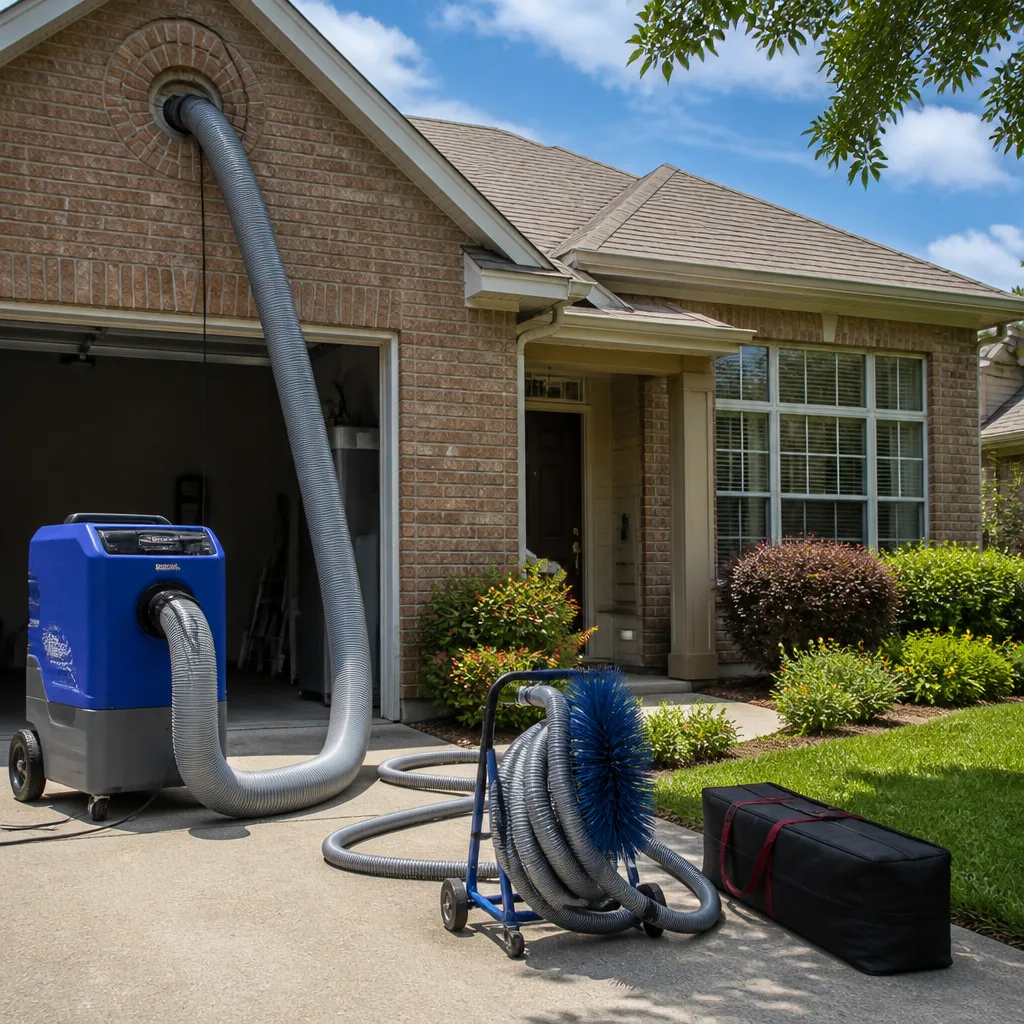 Whole-home duct cleaning
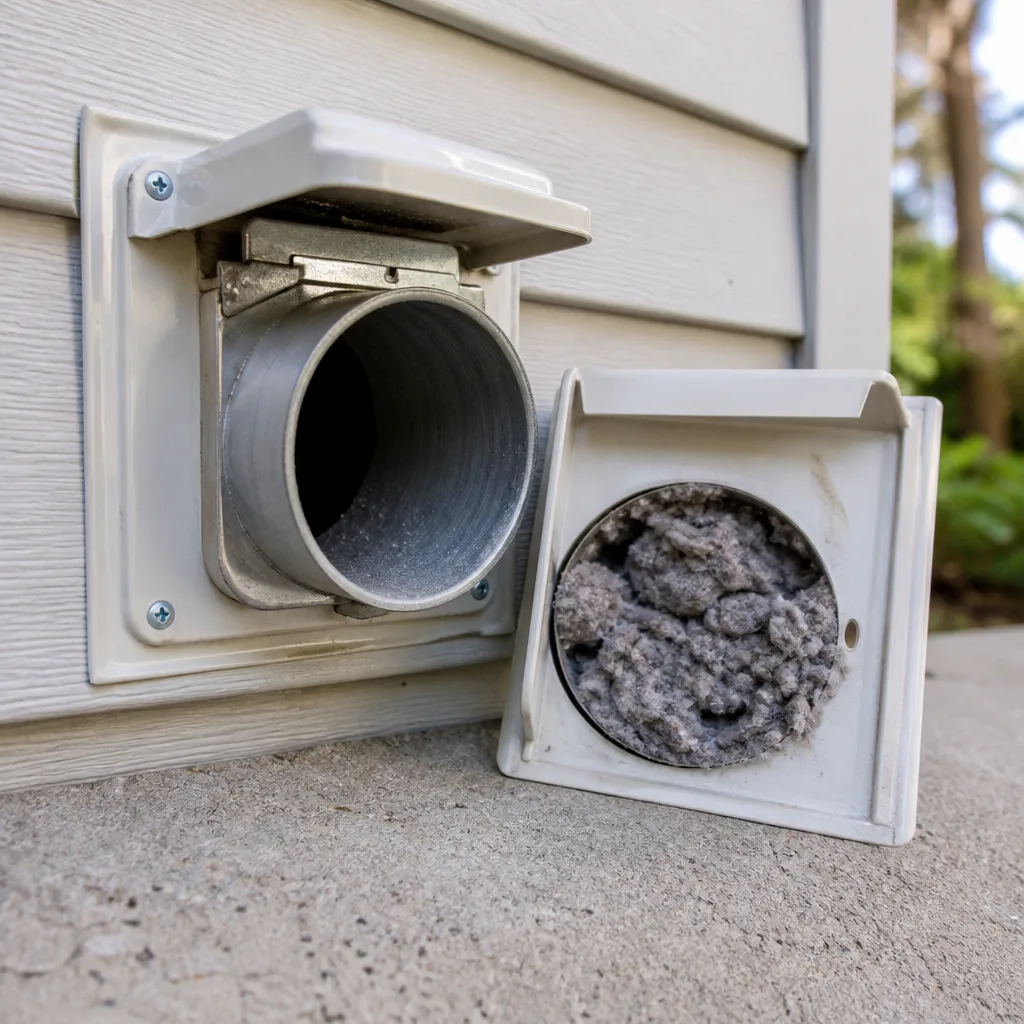 Dryer vent cleaning
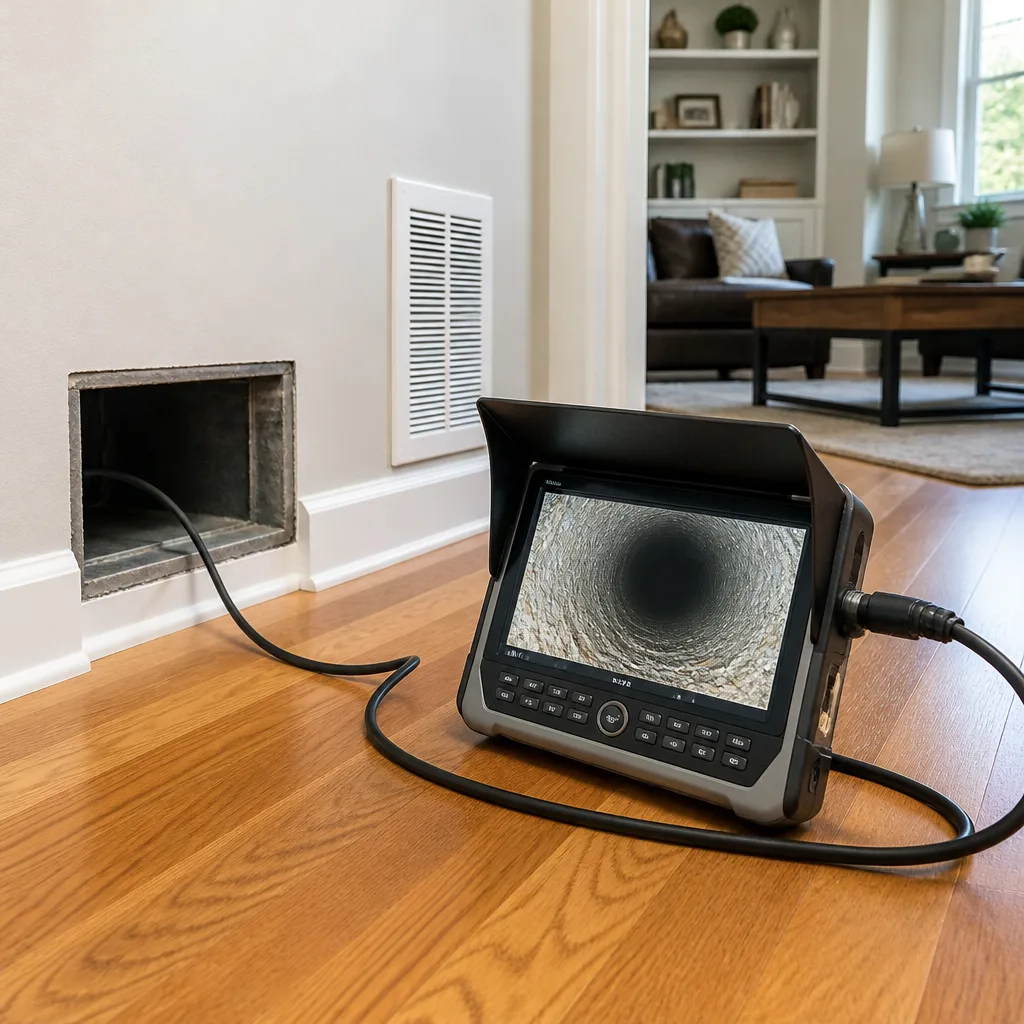 Camera inspection
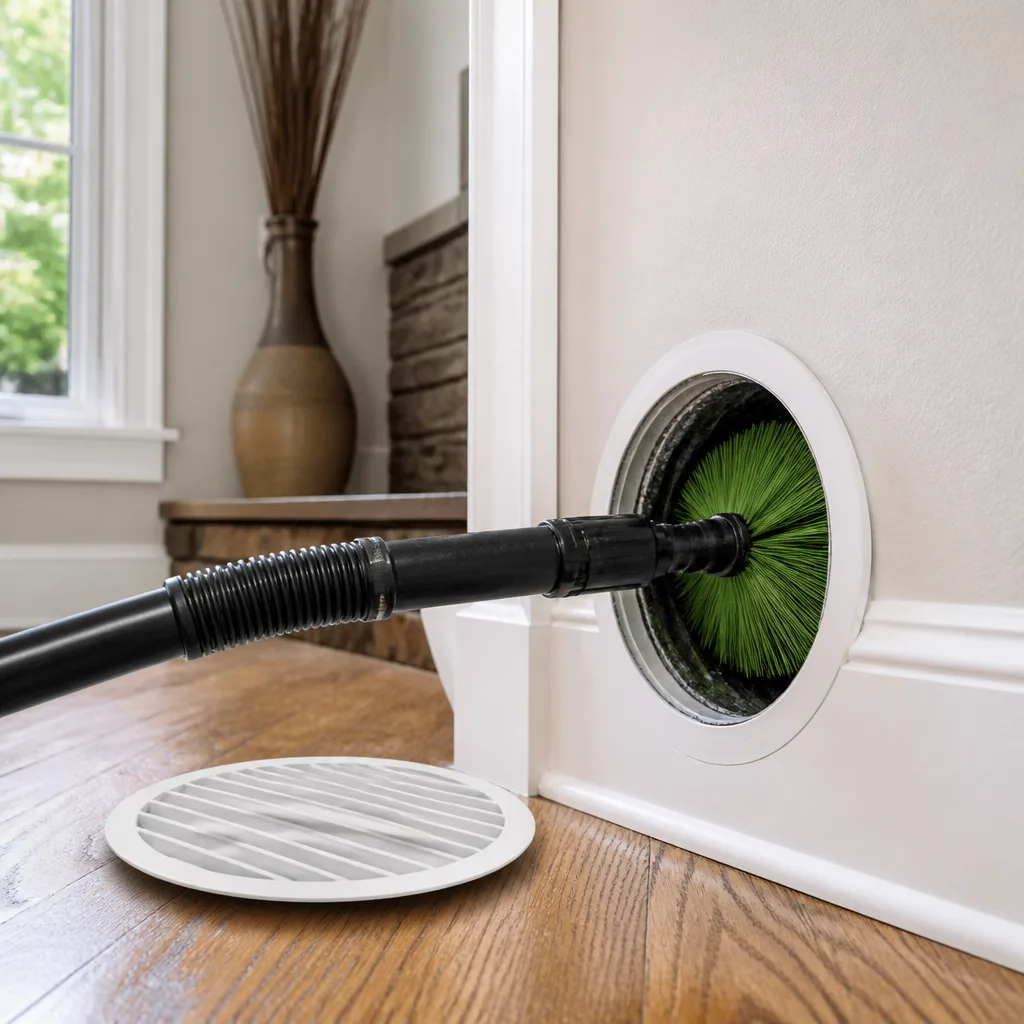 Sanitizing & deodorizing
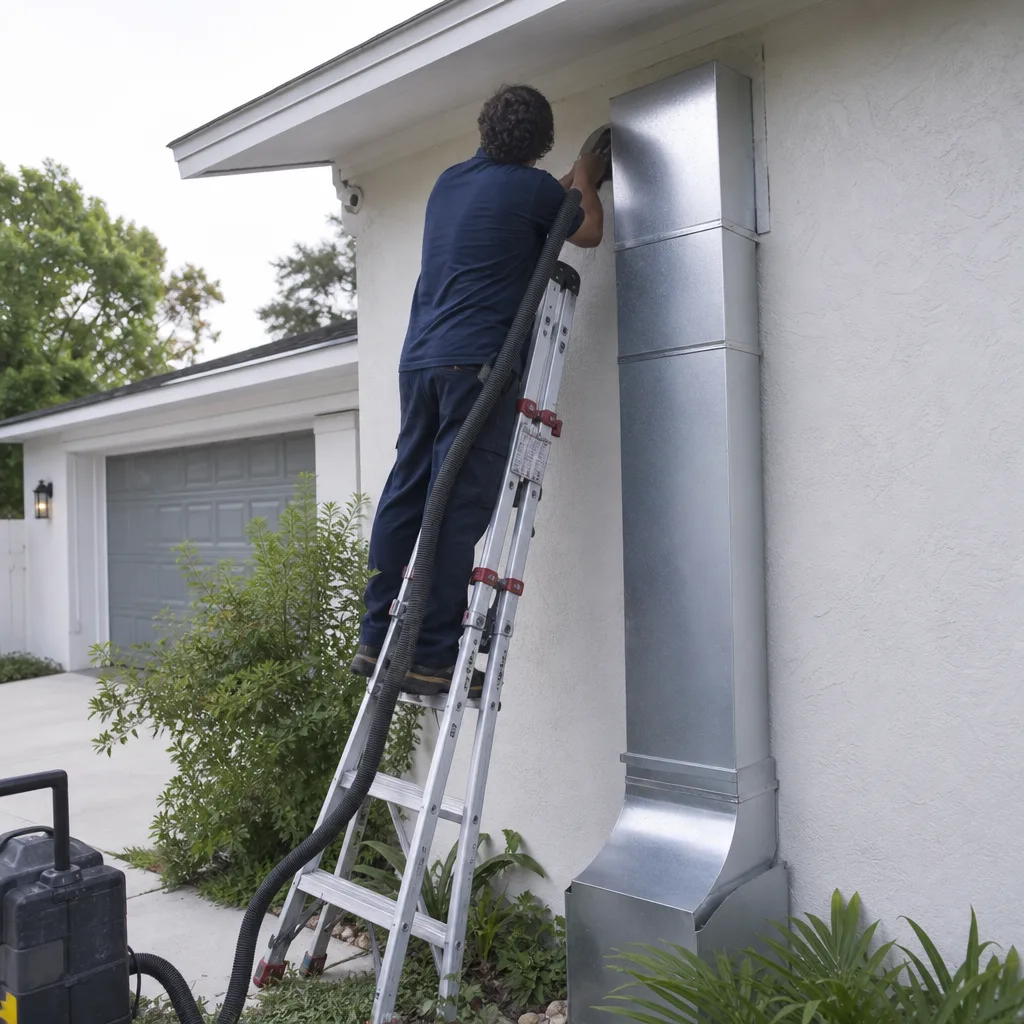
Whole-system duct and dryer vent check with before-and-after photos - you see exactly what came out of your vents
That "$99 whole-house special" is a bait ad - the real number appears once they are in your hallway, or the "clean" is a shop-vac at the register. We photograph the inside of your ducts before and after instead.
DIY vs Professional Air Duct Cleaning: The Tampa Homeowner’s Decision Guide
On a humid July afternoon in Tampa, the air conditioner is running fourteen hours a day, and the dust on your register covers isn’t just cosmetic. It’s a thin layer of everything that’s been cycling through your ducts. A $30 dryer duct brush kit from a hardware store will clean the first four feet of your dryer vent line effectively, and you should use one. But the same homeowner using a shop vac at a supply register is mostly cleaning the register face, not the 20 feet of flex duct behind it where the actual accumulation lives. The DIY/professional line isn’t about skill; it’s about reach. This guide will walk you through what you can genuinely clean yourself, what you can’t, and how to combine both approaches so you’re not paying for work you don’t need or skipping work you do.
Quick Answer
DIY air duct cleaning in Tampa works well for register-level surface cleaning, return grille maintenance, and first-segment dryer vent brushing, but homeowners can’t reach the internal trunk lines and flex duct runs where most of the accumulation and biological growth actually happens. Professional equipment like the Rotobrush and Nikro rotary brush systems uses negative pressure to extract debris from deep inside the system, while homeowner tools just push dust around the accessible edges. The smart approach for most Tampa homes is a hybrid: DIY maintenance at access points combined with professional cleaning as a periodic reset.
Styles & brands we work with
Table of Contents
- The Honest Capability Map: What You Can and Can’t Reach
- Tampa’s Flex Duct Reality: Why Your Ducts Are Different
- When DIY Is the Right First Move in Tampa
- The Real Cost Comparison: Beyond the Rental Fee
- The Hybrid Approach: Professional Reset, DIY Maintenance
- Why Equipment Brand Matters More Than You’d Expect
- Warranty and Access: The Sealed Component Problem
- Tampa Climate Factors That Change the DIY Calculus
The Honest Capability Map: What You Can and Can’t Reach
Before you grab a shop vac or start calling for quotes, you need to understand the physical anatomy of your system and which parts you can actually touch. Air duct cleaning in Tampa homes typically involves three distinct zones of the HVAC system: the visible register and return grille faces, the accessible first few feet of ductwork behind those openings, and the deep trunk lines and flex duct runs that snake through attics, walls, and crawl spaces. Each zone has a different accessibility profile, and the tools that work for one are useless or actively damaging for another.
Zone 1: The Register Face and Return Grille
This is the part you can see, and it’s the part where DIY genuinely works. Dust collects on register covers, return grilles, and the first inch or two of visible duct surface. A damp microfiber cloth, a soft brush attachment on your vacuum, or even a toothbrush for tight louver slots handles this zone effectively. This is maintenance, not cleaning, but it’s maintenance worth doing. Removing register covers and washing them in warm soapy water, vacuuming the visible opening with a crevice tool, and wiping down the surrounding ceiling or wall surface removes the dust that would otherwise re-enter your air stream. Every homeowner should do this, and most don’t.
Zone 2: The First Few Feet of Accessible Duct
Behind the register face lies the first section of ductwork that you can reach with your arm or a flexible vacuum hose. In a home with rigid sheet metal ducts, this reach might extend six to eight feet down a straight run. In a Tampa home with flexible insulated ductwork, the practical reach is often less than three feet because the duct bends, sags, and angles away almost immediately. A shop vac with a long hose, or one of the consumer-grade brush kits sold at home centers, can pull some of the loose debris from this zone. What it can’t do is clean the full circumference of the duct surface, because the hose you’re feeding through is touching only one side at a time and isn’t producing enough negative pressure to pull debris from the entire duct diameter. You’re spot cleaning, not clearing the line.
Zone 3: The Main Trunk Lines and Distal Flex Runs
This is where everything you can’t reach lives. The main supply trunk, the return plenum, the branch flex ducts that run to each room, and the final four to six feet of each run before it terminates at the register are completely inaccessible to homeowner tools. Professional systems like the Rotobrush and Nikro units solve this by combining a rotating brush that agitates and breaks up years of adhered dust and debris with a powerful negative air machine that simultaneously extracts it. The key word is simultaneous. If you agitate without extraction, you’re just loosening debris that will redistribute throughout the house. If you extract without agitation, you’re leaving the film and buildup that’s actually bonded to the duct surface. Only a combined rotary brush and negative pressure system does both at once.
Tampa’s Flex Duct Reality: Why Your Ducts Are Different
If you’ve ever climbed into a Tampa attic in August, you already know what’s up there. The heat is punishing, but more importantly for this conversation, you’ve seen what your ductwork is made of. The overwhelming majority of Tampa homes built since the 1980s use flexible insulated ductwork for the branch lines that run from the main trunk to each room. This isn’t a detail. It changes what’s safe to do yourself.
Flex duct is constructed with an inner liner, typically made of thin plastic or lightweight aluminum, that’s wrapped in insulation and covered with a foil or vinyl jacket. That inner liner is fragile. It’s designed to carry conditioned air, not to withstand bristle brushes from consumer-grade cleaning kits. When I say fragile, I mean you can puncture it with a stiff brush or separate the inner liner from the insulation layer if the brush snags and pulls. A punctured flex duct doesn’t just leak conditioned air into your attic. It actively pulls in attic air, which in Tampa means hot, humid air that’s carrying whatever dust, fiberglass fibers, and attic debris is floating around. That’s a negative return on your DIY investment.
Professional technicians at Morton’s Air Duct Tampa work with flex duct constantly. We know what brush tension is safe for the liner, how to navigate the internal wire coil that gives flex duct its shape, and when a run is too degraded to clean without replacing. The equipment matters, but so does the judgment. A Rotobrush system in the hands of someone who’s cleaned a thousand Tampa flex ducts produces a different result than the same system in the hands of someone who’s never seen one before.
If you’re going to attempt any DIY duct cleaning in a Tampa home with flex duct, limit yourself to the register face and the first visible few inches. Do not feed a brush into a flex duct unless you’re prepared to damage the liner. And understand that the liner damage won’t be visible from inside the house. It’ll show up as a higher cooling bill, a hotter room, and dust that returns faster than before.
When DIY Is the Right First Move in Tampa
There’s one scenario where DIY is not just acceptable but genuinely the smart first step, and it’s a scenario Tampa homeowners hit constantly: post-renovation dust. If you’ve had flooring replaced, drywall patched, a kitchen remodeled, or any construction work that produced dust, that dust has settled into your registers and the first accessible inches of your ductwork. Before you schedule a professional cleaning, do the register-level work yourself.
Here’s what that looks like, step by step:
- Turn off your HVAC system. You don’t want the blower pulling dust deeper into the system while you’re working at the opening.
- Remove every register cover and return grille in the house. Label them by room as you go, especially if they’re different sizes. A Sharpie on blue painter’s tape works fine.
- Wash the covers and grilles in warm water with a few drops of dish soap. Let them air dry completely before reinstalling.
- Vacuum the visible opening of each register with a soft brush attachment. This removes loose surface dust. Do not force the hose deeper than the visible opening.
- Wipe the floor, wall, or ceiling surface immediately surrounding each opening. Dust clings to these surfaces and will re-enter the air stream if you leave it.
- Change your HVAC filter. The filter has been catching the renovation dust that made it through the return, and it’s due.
This is the DIY work that makes sense. It removes the visible surface accumulation, it’s safe for flex duct, and it gives the professional cleaning that follows a clean starting point. In fact, doing this work before calling a professional means the professional can focus equipment time on the deep cleaning that only a negative pressure system can accomplish, rather than spending billable time on something you’ve already handled. That’s a smarter use of everyone’s time and your money.
The Real Cost Comparison: Beyond the Rental Fee
The most common question in DIY versus professional conversations is about money. A hardware store rental or a $40 brush kit looks dramatically cheaper than a professional service call, and on the surface, it is. But the honest comparison isn’t equipment cost versus service fee. It’s what you’re getting for each dollar, and what failure costs you after the fact.
What You’ll Actually Spend on DIY
- Equipment: $30 to $80 for a consumer duct cleaning brush kit, or $60 to $120 per day to rent a professional-grade unit from a home center (though most rental units lack true negative pressure capability).
- Time: A thorough register-level cleaning of a 2,000 square foot home takes two to three hours with a shop vac and basic tools. Adding an attempt at internal duct cleaning, even a partial one, adds several more hours of uncomfortable work in hot attic spaces.
- Result: You’ve cleaned the faces and the first few inches. The internal surfaces of the trunk lines and flex runs remain untouched, which is where the bulk of the accumulation lives.
- Risk: If you’ve fed a brush into flex duct and punctured the liner, you’ve created a problem that costs $200 to $600 to repair, and that’s if the damaged section is accessible and discoverable.
What You’ll Actually Spend on Professional Cleaning
- Equipment: Included in the service. Professional systems from Rotobrush, Nikro, and Abatement Technologies cost $8,000 to $25,000 per unit. You’re renting that capability for a few hours.
- Time: A professional crew cleans a 2,000 square foot Tampa home in roughly half a day, including set-up, protection, cleaning, and documentation.
- Result: The entire system, from return grille to supply register, is cleaned with simultaneous agitation and negative pressure extraction. Debris is removed from the home, not redistributed.
- Risk: Managed. The service includes shoe covers, drop cloths, and a written price before work starts. At Morton’s Air Duct Tampa, it also includes a photo of the clean-up before the crew leaves and a 365-Day Done Right Promise that backs the work.
The cost difference is real, but it tracks with what’s being delivered. A professional cleaning is a complete system service. A DIY attempt is partial surface cleaning with some risk attached. Neither one is a wrong use of money. What’s wrong is thinking the DIY version accomplishes the same thing.
The Hybrid Approach: Professional Reset, DIY Maintenance
Most guides frame this as either/or. It’s not. The smartest approach for a Tampa homeowner, and the one we recommend to customers who ask us directly, is a hybrid model-something we explore further in our guide on seasonal air duct cleaning care for Tampa. You use professional cleaning to reset the system to a clean baseline, then you use simple DIY maintenance to extend the interval between professional visits.
Here’s what that looks like in practice:
- Have the system professionally cleaned once. This removes the years of accumulated dust, debris, pet dander, and whatever else has been circulating since the home was built or the last cleaning happened. This is the reset.
- Change your HVAC filter every 30 to 60 days. Tampa’s year-round AC season means your filter is working harder than the manufacturer’s 90-day suggestion assumes. A dirty filter forces your blower to work harder and allows more bypass dust into the system.
- Remove and wash register covers every 8 to 12 weeks. This is the Zone 1 work described earlier. It takes fifteen minutes and keeps the visible surfaces clean.
- Brush the first four feet of your dryer vent line every 3 to 6 months. See our full guide on Dryer Vent Cleaning in Tampa for the details on this one. It’s the single highest-value DIY maintenance task in your home.
- Schedule the next professional cleaning in one to three years. The exact interval depends on pets, occupants, renovation history, and whether anyone in the home has allergies or respiratory concerns. If you have multiple shedding pets and the AC runs year-round, the interval shortens. Two years is a reasonable starting point for most Tampa homes; one year for homes with multiple pets or recent renovation work; three years for a clean household with good filter discipline.
This approach acknowledges the reality of both options. DIY maintenance is genuinely useful at the access points. Professional cleaning is genuinely necessary for the deep system work. Neither replaces the other.
That hybrid philosophy sits behind how we approach service at Morton’s Air Duct Cleaning. We don’t tell homeowners they need to spend money on work they can do themselves. We tell them which parts they should do themselves and which parts need the equipment only professionals carry. It’s the same advice we’d give a neighbor.
Why Equipment Brand Matters More Than You’d Expect
Most homeowners assume a brush is a brush and a vacuum is a vacuum. That assumption breaks down fast once you understand what professional duct cleaning actually requires. The consumer-grade tools sold at home centers are designed for the visual surface cleaning that satisfies a quick home inspection. The professional-grade equipment we run at Morton’s is engineered for a fundamentally different job: removing adhered debris, biological film, and fine particulate from the full internal surface of every duct run in the home.
The Rotobrush systems we use combine a rotating agitation head with a powerful vacuum that runs simultaneously. The brush breaks up what’s stuck to the duct walls. The vacuum removes it from the system before it can recirculate. The Nikro units we run for larger commercial-style trunk lines work on the same principle at higher volume. Neither system can be replicated by a shop vac and a drywall saw, and neither can be safely substituted by a rental unit that offers agitation without true negative pressure.
There’s also a less obvious reason the equipment matters: containment. A professional system is sealed. The debris collected from your ducts is captured in a filter system and removed from the home. A shop vac, even one with a HEPA filter, is exhausting air back into your living space. You’re pulling dust out of the ducts and spraying it into the house. That’s not cleaning. That’s redistribution.
We also run Abatement Technologies HEPA-filtered negative air machines on jobs where the system is severely contaminated or where there’s evidence of mold growth. These units create contain pressure dynamics that keep airborne particulate from spreading during the cleaning process. No homeowner tool set includes anything comparable, because none can.
The brand names matter because the engineering behind them matters. Rotobrush, Nikro, and Abatement Technologies build equipment for professional restoration contractors and medical facility maintenance teams. When we show up at a Tampa home with that equipment, we’re bringing the same caliber of gear used in commercial settings, adapted for residential systems. That’s not marketing language. It’s a description of the tooling difference between what we can do and what a hardware store rental can do.
Warranty and Access: The Sealed Component Problem
Here’s a consideration most DIY guides never mention: your HVAC system includes sealed components, and accessing them yourself can void the warranty. The evaporator coil, the blower assembly, the heat exchanger on a gas furnace, and certain sections of the supply plenum are sealed at the factory and designed to be serviced only by qualified technicians. When we clean a system at Morton’s Air Duct Tampa, we access these components through their service panels using professional procedures that preserve the manufacturer’s warranty status.
If a homeowner opens a sealed component to vacuum it out and something goes wrong, the warranty claim can be denied. That’s not a hypothetical. HVAC manufacturers routinely deny warranty coverage for failures attributed to unauthorized access or service. The cost of a denied compressor or heat exchanger warranty claim dwarfs the cost of a professional duct cleaning by a factor of ten.
This matters specifically for the coil. The evaporator coil is the single most important component to keep clean in a Tampa home, because it’s the junction where your air is actually cooled and dehumidified. A dirty coil reduces efficiency, increases run times, and in a humid climate like Tampa’s, it creates the conditions where biological growth thrives. Cleaning the coil properly requires accessing the air handler with the right tools and the right knowledge to avoid damaging the delicate fins. If you bend a fin field with a consumer brush, you’ve reduced your system’s heat exchange capacity until someone repairs it.
The warranty dimension is one of the strongest arguments for professional service. It’s not that you can’t open the panel. It’s that opening the panel has consequences you won’t see on the tool rental receipt.
Tampa Climate Factors That Change the DIY Calculus
Tampa’s climate isn’t like the rest of the country’s, and your duct system responds to it accordingly. The combination of year-round heat, persistent humidity, and a ten-month cooling season creates conditions that accelerate everything bad that happens inside a duct system.
First, the runtime. A Tampa AC system operates 2,500 to 3,500 hours per year. Compare that to a northern home where the cooling system runs 800 to 1,200 hours. Every hour of runtime pulls air across the coil, through the ducts, and into the house. Every hour of runtime pulls whatever’s in the house back through the return. The accumulation per year in Tampa is roughly three times what a system in a milder climate accumulates. That means the interval between needed cleanings is compressed, and the volume of debris to remove is larger.
Second, the humidity. Tampa’s average relative humidity hovers in the 70s year-round. Inside a duct system, especially near the evaporator coil where condensation forms during cooling cycles, the internal environment is frequently at the dew point. That damp surface is a magnet for dust. Fine particulate that would blow through a dry duct in Arizona sticks to the damp walls of a Tampa duct and stays there season after season. Over time, that dust layer becomes dense enough to support biological growth. The duct system becomes not just dirty but actively habitat. A dry environment masks this problem. Tampa’s environment feeds it.
Third, the pest pressure. Tampa has one of the highest populations of roof rats in the southeastern United States, and those rats love flex duct. They chew through the outer jacket and inner liner to access the conditioned space inside, especially during summer when attic temperatures reach 140 degrees. The result is rodent droppings, urine, and nesting material inside the duct system. If you’ve ever smelled a sharp ammonia odor coming from your vents, that’s the signature. A DIY register cleaning doesn’t address this at all. Professional cleaning removes the contamination, and a professional inspection identifies whether the duct needs replacing entirely.
Fourth, the flex duct prevalence discussed earlier. This is the factor that makes Tampa-specific advice necessary. Advice written for a national audience assumes rigid sheet metal ducts that a homeowner can safely brush. Tampa’s flex duct stock doesn’t tolerate that. The national advice is actively wrong for the majority of homes in this market.
Each of these factors pushes the calculus further toward professional cleaning as the baseline service and DIY as the maintenance layer. In a drier climate with rigid ducts, the DIY register brush and shop vac routine covers a larger share of what actually needs doing. In Tampa, the deeper system work is more necessary and more frequent, and that means more of it lands in professional territory.
Common Mistakes to Avoid
- Feeding a hardware store brush into flex duct. This is the single most common mistake we see in Tampa homes, and the one that causes the most avoidable damage. Flex duct liners are thin, fragile, and easily torn. A punctured liner in a hot, humid attic pulls attic air and contamination directly into the conditioned space.
- Using a shop vac without a sealed filter as an extraction tool. A shop vac without a HEPA-grade filter is exhausting the fine dust you just vacuumed directly back into the room. You’re not removing dust; you’re aerosolizing it. If your shop vac has a cheap filter, you’re making the air in the house dirtier than it was before.
- Cleaning only the supply registers and ignoring the return side. The return path carries all the unfiltered air from the house back to the blower. Dust accumulation on the return side is often heavier than the supply side, and it’s the dirt that’s about to enter the coil. Ignoring the return grilles and the return trunk means cleaning the exit while ignoring the entrance.
- Assuming the filter protects the ducts. A furnace filter is not a duct filter. It protects the blower and coil from larger debris, not the duct system from fine dust. Most Tampa homes run year-round with filters that are undersized for the load, and everything that slips past accumulates inside the system.
- Attempting evaporator coil cleaning without training. The coil is the most delicate component in the system, and the fins bend when you look at them wrong. Bending a fin field is easy; repairing one is expensive. This is a professional-access component, not a homeowner-access component.
- Delaying professional cleaning until there’s a visible problem. By the time you see dust blowing from the registers or smell musty air when the system runs, the accumulation has been building for years. The smart reset is preventive, not reactive.
- Renting professional equipment without professional training. Hardware store rental units that promise professional results are marketing to you. Operating a rotary brush system safely in a flex duct home requires training in liner tension, access technique, and containment. The tool rental doesn’t include the judgment.
See the difference
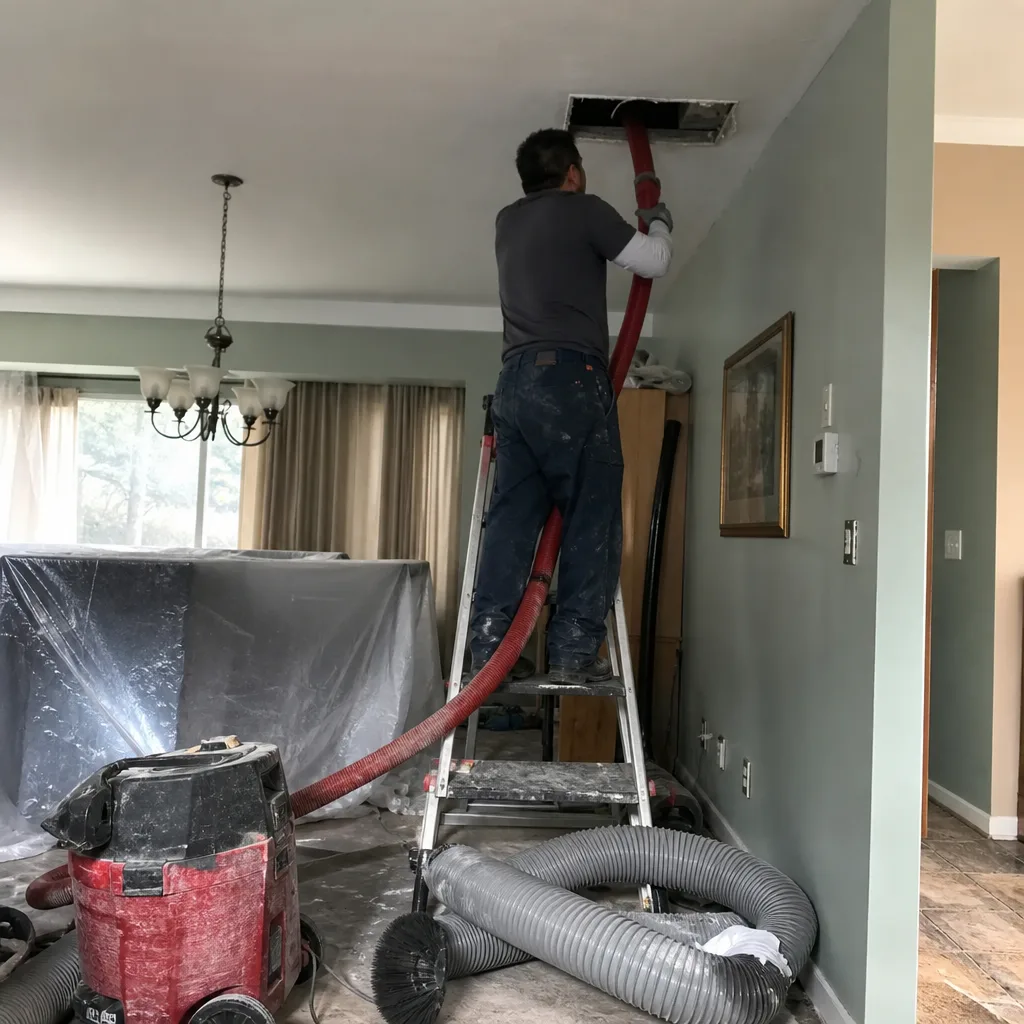 Before
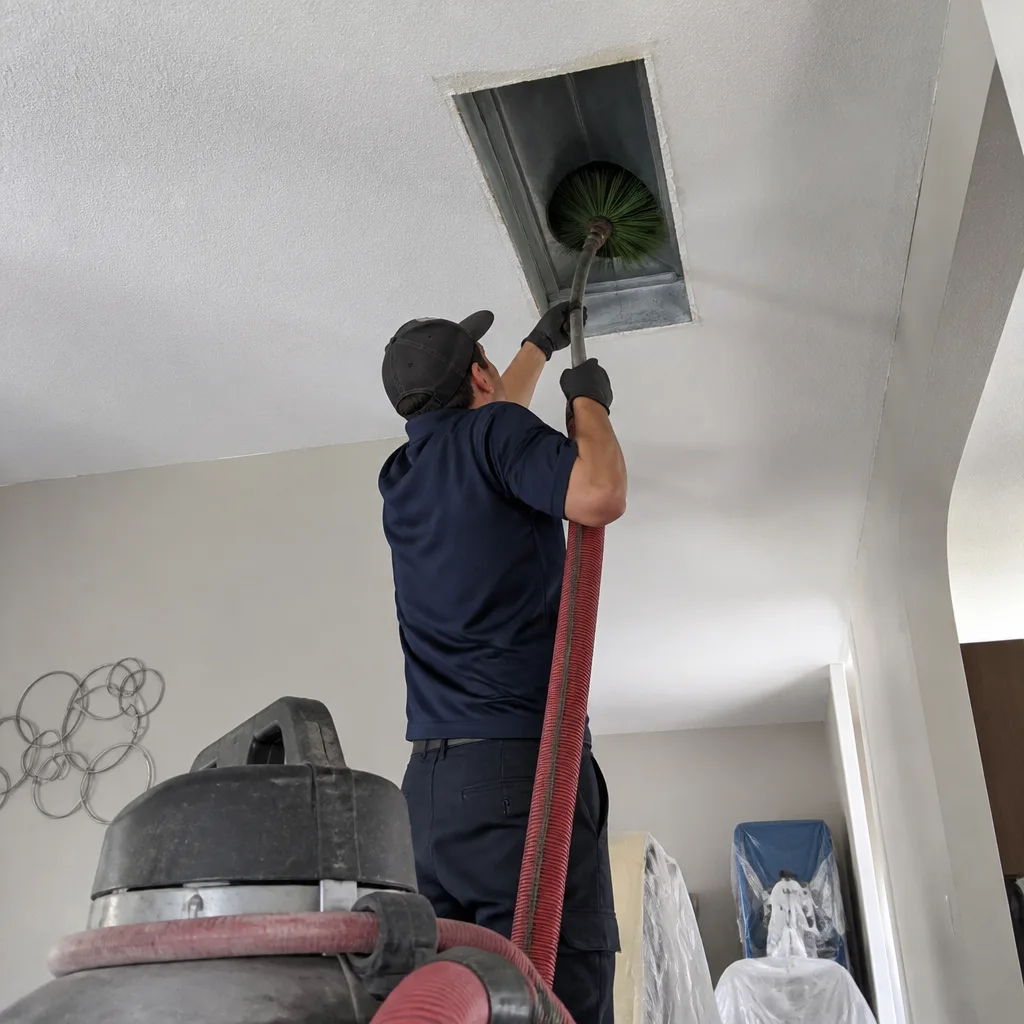 After
After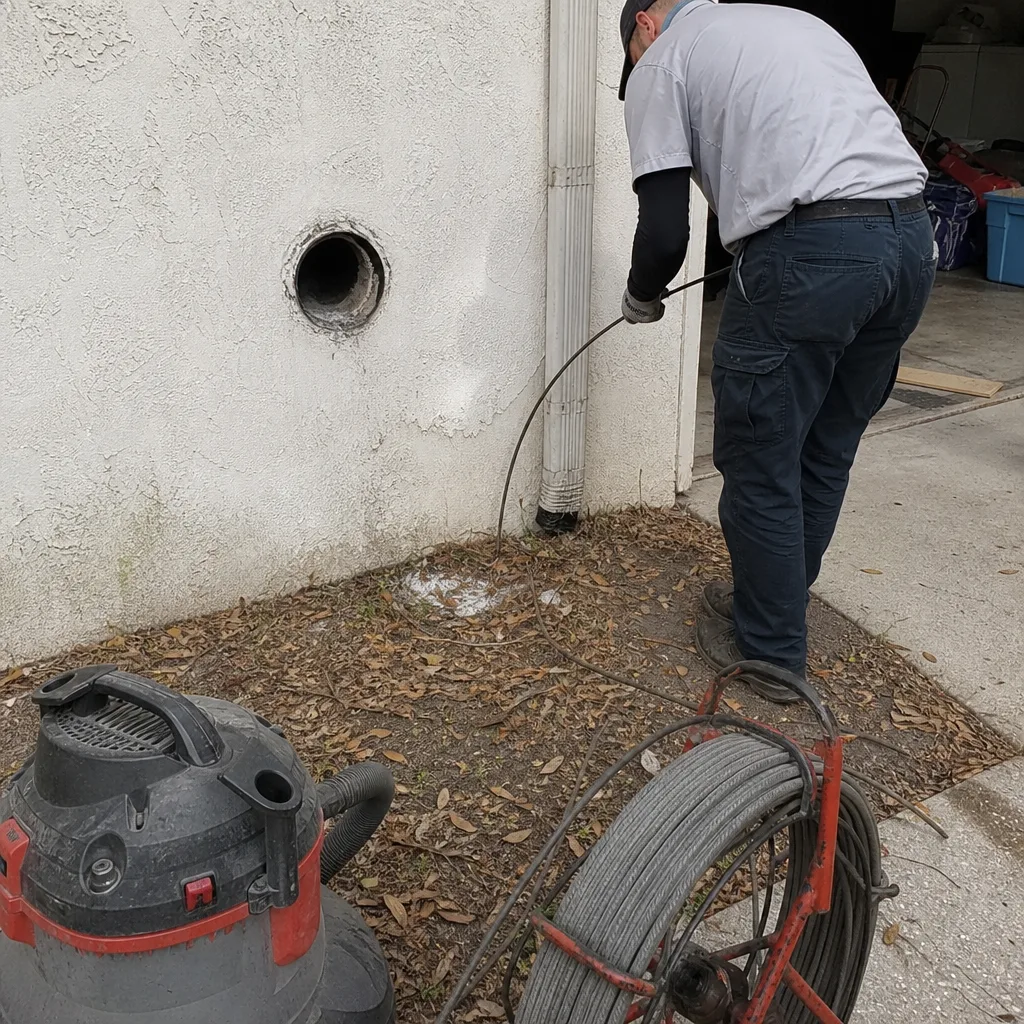 Before
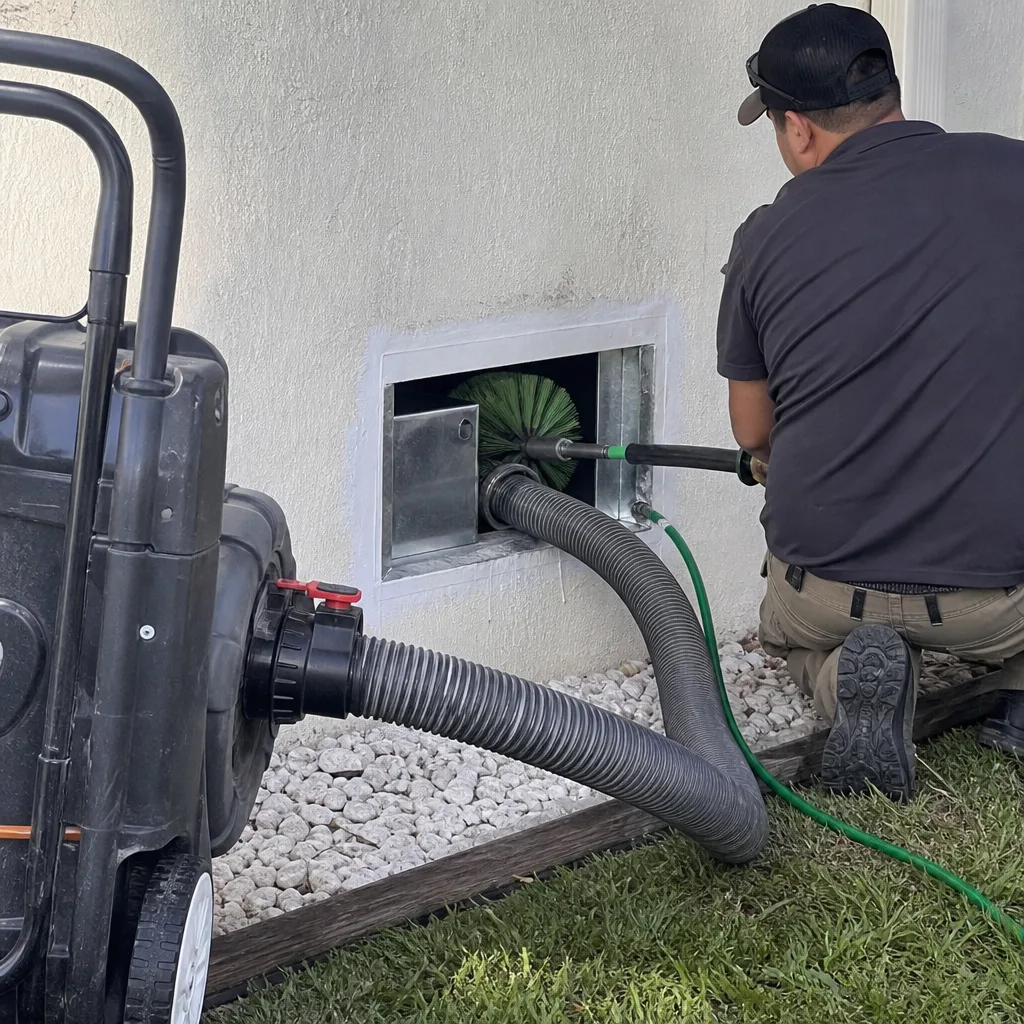 After
After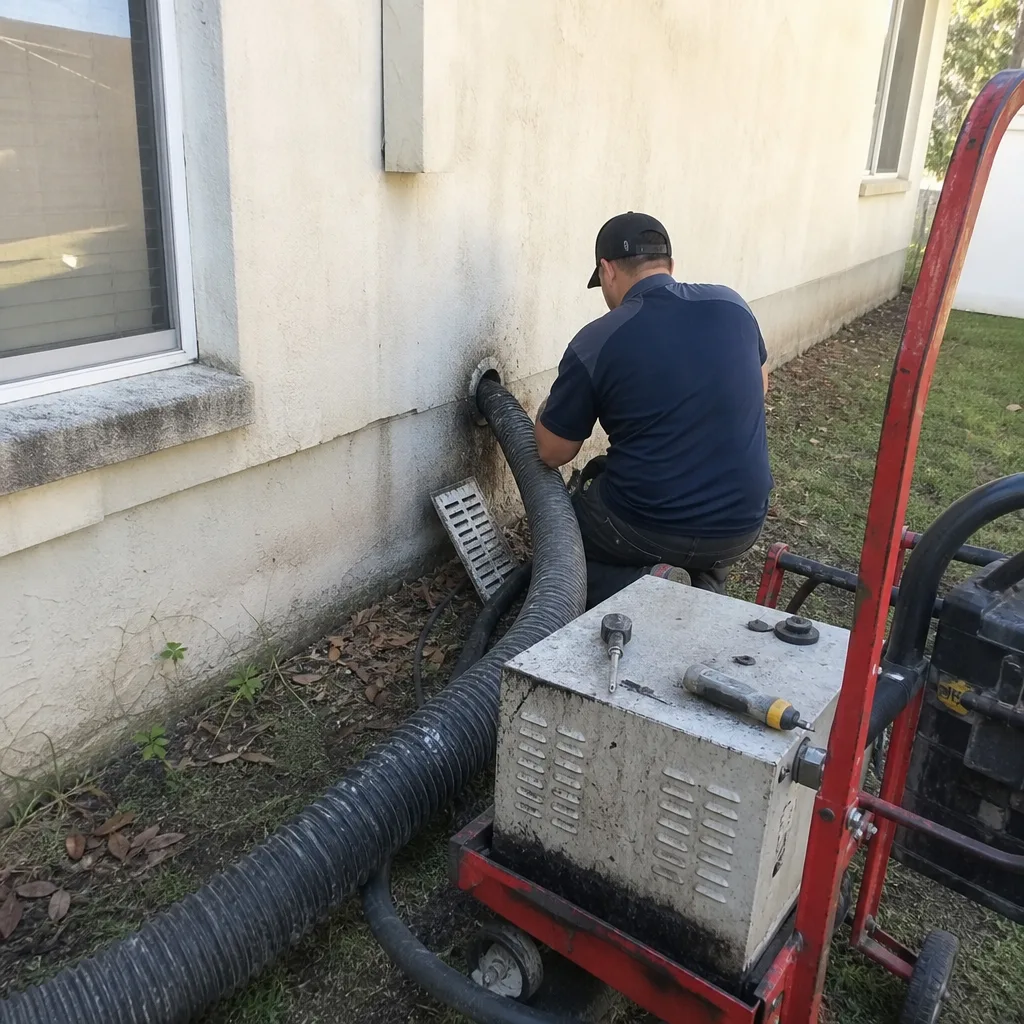 Before
 After
AfterWhen to Call a Professional
Call a professional when you see visible mold growth anywhere in the system, when you smell persistent musty or ammonia-like odors from the vents, when renovation dust is visibly blowing from the registers weeks after the work finished, when anyone in the home has unexplained allergy or respiratory symptoms that improve away from home, or when you’ve never had the system cleaned and the home is more than five years old. These aren’t optional maintenance signals. They indicate contamination that DIY tools can’t reach and can’t remove. Mortons Air Duct Tampa offers free estimates in Tampa, and you’ll get a written price before any work starts. Call (850) 738-9748 to schedule an assessment, or visit our Air Duct Cleaning in Tampa page to see the full service detail. If you’re not sure whether the system needs professional attention, the walkthrough will answer that question. There’s no obligation attached to the estimate.
Frequently Asked Questions
Yes, for register-level surface cleaning and dryer vent maintenance. Removing and washing register covers, vacuuming the visible opening, changing the HVAC filter, and brushing the first four feet of the dryer vent line are genuinely useful maintenance tasks that every Tampa homeowner should do. What DIY is not worth doing is attempting to clean the internal trunk lines and flex duct runs, because homeowner tools can’t reach them and trying to brush flex duct risks damaging the liner.
Professional air duct cleaning in Tampa typically ranges from $350 to $600 for a standard single-system home under 2,500 square feet, with larger homes or heavily contaminated systems running higher depending on scope. The honest comparison is against what the service delivers: complete system cleaning with negative pressure extraction, not partial surface cleaning. Every quote from Morton’s Air Duct Tampa includes a written price before work starts, so there’s no surprise line item on the invoice. Call (850) 738-9748 for a free estimate on your specific home.
Cheaper quotes usually mean less equipment, less time, or less coverage. A bait-priced service may clean only the visible register faces and the first few feet of duct, which is the DIY-able zone, while leaving the deep trunk lines untouched. A service that uses a shop-vac-style unit without true negative pressure is essentially doing what you could do yourself with rented tools. The price difference reflects the equipment and scope difference. When you call for quotes, ask what equipment they run and whether they clean the entire system or just the accessible portions. For help vetting providers, see how to hire a air duct cleaning contractor in Tampa: a step-by-step guide.
Ask for visual proof. A completed professional cleaning should include before-and-after photographs of the duct interior, the coil, and the register areas. Morton’s Air Duct Tampa provides a photo of the clean-up before the crew leaves every job, so you have visual documentation of what was done and that the house was left clean. If a company can’t provide before-and-after photos, that’s a signal to keep looking.
In Tampa’s year-round AC climate, every one to three years is a realistic interval for professional cleaning, depending on pets, occupants, renovation history, and filter discipline. Homes with multiple shedding pets and continuous AC runtime fall toward the shorter end. Homes with good filter habits, no pets, and no renovation dust fall toward the longer end. The DIY maintenance layer described in this guide helps extend the interval. Get a professional assessment if you’re not sure where your home falls.
Brushing the first four feet of the dryer vent line with a proper dryer vent brush kit is safe and effective, and it’s one of the highest-value DIY tasks you can do. What’s not safe is running a long brush deep into a vent line that has partial clogs, sharp bends, or existing damage, because the brush can compact the clog rather than clear it. Tampa’s humid air makes dryer lint stickier and more prone to compaction than in drier climates. If the brush meets resistance you can’t clear easily, stop and call a professional for Dryer Vent Cleaning in Tampa. For the full picture on what we do and why, start at our Mortons Air Duct Tampa home page.
The Bottom Line
The DIY versus professional question for air duct cleaning in Tampa isn’t about whether you’re handy. It’s about which part of the system you’re trying to clean. The register faces and return grilles are yours to maintain, and doing so extends the life of every professional cleaning. The internal trunk lines, flex ducts, coil, and blower are beyond the reach of homeowner tools, and the tools that try to reach them risk damaging the fragile flex duct liner common in Tampa homes. Use DIY for the surface, professional for the system, and yourself for the filter changes in between. That combination keeps the air in your Tampa home cleaner, longer, for less total cost than either approach alone. If you’re ready to establish a clean baseline, Mortons Air Duct Tampa provides written pricing, professional equipment, and the 365-Day Done Right Promise on every job. Call (850) 738-9748 for a free estimate.
Written by Paul Adeyemi, Owner at Mortons Air Duct Tampa, serving Tampa since 2005.